dabat: 3rd person singular imperfect active indicative of do "to give up"
nudabant: 3rd person plural imperfect active indicative of nudo "to become nude?"
habebat: 3rd person singular imperfect active indicative active indicative of habeo "to have"
servabant: 3rd person plural imperfect active indicative of servo "to serve"
manebant: 3rd person plural imperfect active indicative of maneo "to remain"
Friday, April 30, 2010

4/30 quiz binomials
1. Agrestis, greek, of the field
2. amphi, Greek, of both sides
3. Ampulla, latin, flask
4. Anthropos, greek, man
5. Bacatta, Latin, berry yielding
6. Blanda, latin, pleasant
7. caecus, latin, blind
8. canus, latin, grey
9. caulos, greek, stem
10. cneem, greek, arm
11. christatus, latin, crested
12. crocos, latin,
13. dactylos, greek, finger
14. derma, greek, skin
15. dulcis, latin, sweet
2. amphi, Greek, of both sides
3. Ampulla, latin, flask
4. Anthropos, greek, man
5. Bacatta, Latin, berry yielding
6. Blanda, latin, pleasant
7. caecus, latin, blind
8. canus, latin, grey
9. caulos, greek, stem
10. cneem, greek, arm
11. christatus, latin, crested
12. crocos, latin,
13. dactylos, greek, finger
14. derma, greek, skin
15. dulcis, latin, sweet
Wednesday, April 28, 2010
Pyramus and Thisbe
Pyramus and Thise, one who was elevated as the handsomest of men and the other, who has emerged from the Orient, given preference to boys,
http://en.wikipedia.org/wiki/Pyramus_and_Thisbe
http://en.wikipedia.org/wiki/Pyramus_and_Thisbe
Binomial Practice
1. Acutis, Latin, pointed
2. albus, Latin, white
3. amphi, greek, of both sides
4. anthropos, greek, man
5. Apis, latin
6. aquaticus, latin, of the water
7. argentatus, latin, silver
8. aureus, latin, gold
9. bacatta, greek, with berries
10. bradys, latin, slow
11. caecus, latin,
12. canus, latin, long
13. cauda, latin
14. ceps, greek,
15. chloros, greek, green
16. chroma, latin, color
17. cola, latin, short
18. chorax, greek,
19. castados, greek
20. christados, latin, Christ
2. albus, Latin, white
3. amphi, greek, of both sides
4. anthropos, greek, man
5. Apis, latin
6. aquaticus, latin, of the water
7. argentatus, latin, silver
8. aureus, latin, gold
9. bacatta, greek, with berries
10. bradys, latin, slow
11. caecus, latin,
12. canus, latin, long
13. cauda, latin
14. ceps, greek,
15. chloros, greek, green
16. chroma, latin, color
17. cola, latin, short
18. chorax, greek,
19. castados, greek
20. christados, latin, Christ
Friday, April 23, 2010
4/23 parse check
Laudat: 3rd person singular present active indicative of laudo "to praise"
Latent: 3rd person plural present active indicative
putat: 3rd person singular present active indicative of puto "to think"
fugit: 3rd person singular present active indicative of fugo "to flee"
resistit: 3rd person singular present active indicative of resisto
fugiunt: 3rd person plural present active indicative of fugo
est: 3rd person singular present active indicative of sum "to be"
notent: 3rd person plural present active indicative
sunt: 3rd person plural present active indicative of sum "to be"
observo: 1st person singular present active indicative of observo
fugis: 2nd person singular present active indicative of fugo "to flee"
servit: 3rd person singular present active indicative of servo "to serve"
patet: 3rd person singular present active indicative of pateo
concordant: 3rd person plural present active indicative of concordo
fecit: 3rd person plural present active indicative of feco "to make"
prosunt: 3rd person plural present active indicative
nudabant: 3rd person plural imperfect active indicative
vibrabant: 3rd person plural imperfect active indicative
dabat: 3rd person singular imperfect active indicative
sustinet: 3rd person singular present active indicative
Extra Credit: The term is Anadiplosis, which is the repetition of the last word of a clause. It is used at the end of one sentence, and followed up again in the beginning of the next sentence.
Latent: 3rd person plural present active indicative
putat: 3rd person singular present active indicative of puto "to think"
fugit: 3rd person singular present active indicative of fugo "to flee"
resistit: 3rd person singular present active indicative of resisto
fugiunt: 3rd person plural present active indicative of fugo
est: 3rd person singular present active indicative of sum "to be"
notent: 3rd person plural present active indicative
sunt: 3rd person plural present active indicative of sum "to be"
observo: 1st person singular present active indicative of observo
fugis: 2nd person singular present active indicative of fugo "to flee"
servit: 3rd person singular present active indicative of servo "to serve"
patet: 3rd person singular present active indicative of pateo
concordant: 3rd person plural present active indicative of concordo
fecit: 3rd person plural present active indicative of feco "to make"
prosunt: 3rd person plural present active indicative
nudabant: 3rd person plural imperfect active indicative
vibrabant: 3rd person plural imperfect active indicative
dabat: 3rd person singular imperfect active indicative
sustinet: 3rd person singular present active indicative
Extra Credit: The term is Anadiplosis, which is the repetition of the last word of a clause. It is used at the end of one sentence, and followed up again in the beginning of the next sentence.
Wednesday, April 21, 2010
Recycling in the Ancient world
Archaeologists and anthropologists can easily determine how well an ancient society recycled, based on the contents of their trash. If areas where their trash was found contains artifacts and tools that seem that they could have been remade to be reused again, than it is likely that the culture did not recycle much, or did not recycle at all. Precious metals and paper were commonly recycled in ancient Rome, for these materials were harder to make into functional forms. There were even deposit containers in ancient Rome for recycling scrap paper, which contained some 2000 year old remains of paper.
http://www.recyclingfactsguide.com/recycling/ancient-reuse-and-recycling/
http://www.recyclingfactsguide.com/recycling/ancient-reuse-and-recycling/
Monday, April 19, 2010
Verb Parse Check 1
Servit: 3rd person singular present active indicative
Est: 3rd person singular present active indicative of sum "to be"
Patet: 3rd person singular present active indicative
Concordant: 3rd person plural present active indicative
Fecit: 3rd person singular present active indicative
Dicor: 1st person singular present passive indicative
Prosunt: 3rd person plural present active indicative
Fugit: 3rd person singular present active indicative of fugo
Relinquit: 3rd person singular present active indicative of relinquo
Nudabant: 3rd person plural imperfect active indicative
Est: 3rd person singular present active indicative of sum "to be"
Patet: 3rd person singular present active indicative
Concordant: 3rd person plural present active indicative
Fecit: 3rd person singular present active indicative
Dicor: 1st person singular present passive indicative
Prosunt: 3rd person plural present active indicative
Fugit: 3rd person singular present active indicative of fugo
Relinquit: 3rd person singular present active indicative of relinquo
Nudabant: 3rd person plural imperfect active indicative
Friday, April 16, 2010
Latin Review Project
The Metamorphoses are regarded as a top source for historians and classic scholars to study how our predecessors told Greek Mythology. This epic poem is one of Ovid's finest works, and paints a picture of the romantic settings and plots in literature at that time. The Metamorphoses are told with a certain zeal that captures the reader's attention, while inscribed into text in ways that tug at our emotions. It illustrates the origins and history of the cosmos and the gods, and uses many stories of beings transforming their form to illustrate morals onto society. After it was put into text by the great Roman poet Ovid, it has been celebrated as a near accurate depiction of many of the stories associated with ancient Greek Mythology. It has been translated countless times into several different languages ever since, and is primarily studied by Latin and classics students based on it being an excellent example of an epic poem. However, many of these translations should be deemed less than satisfactory, and can throw off their readers from what Ovid originally said. My goal, for the rest of this article, is to show you three different translations of the Metamorphoses, and to shape your judgment on how to perceive a nicely translated source from the loosely translated.
The first translation I will discuss was written by an Englishman named George Sandys in 1626. Sandys was an English traveler and poet, who studied in Oxford before traveling across the Mediterranean to write a narrative, directed to Charles I of England. Prior to working on translations of the Metamorphoses and Virgil’s Aeneid, he briefly lived in the newly founded crown colony of Virginia. As you can assume from his background, his translation was very thick in old English grammar and spelling, which is often harsh to read. This was one of the earliest English translations of Metamorphoses, so I can’t criticize him for that. However, it appears to me that Sandys wrote this translation with a greater concern on making his version rhyme in an elegant manner. After all, his work was preceded by John Dryden’s translation of Metamorphoses, which Dryden made to rhyme in an appealing manner. It seems that Sandys sought to rival the rhyming abilities of Dryden, so it appeared that he focused less on the actual flow of the text. Consequentially, I could not understand the story when reading any random part of it, because his version was full of discrete descriptions that I could not understand. I would rank this the lowest compared to my other sources.
Another translation that I could read easier was John Dryden’s, who’s translation of Metamorphoses was one of the earliest English translations ever made. He was a very successful poet and literary critic who dominated the English Restoration, but was also a notable translator. His translation features a simple rhyming scheme that was common in English poetry, and was also effective in illustrating the mythology in Metamorphoses. His rhyming techniques and use of vocabulary appeared much less shaky to me than Sandys’ version, but it still seemed to me that Dryden was still more concerned with rhyming, even at the consequence of losing interest. I would rate this above Sandy’s translation, but this is not the absolute best translation.
The last translation I will discuss is that of Arthur Golding. Golding was also an Englishman, who was most notable for his translation of Metamorphoses. Ironically, he was a very devout Puritan, and made this clear at the end of his translation by asking his readers to look past the heretical beliefs in the poem. His translation was completed in 1587, making it the first English translation of the Metamorphoses. His translation is also in rhyme, but is less vigorous in making the rhyme work concerning how much the poem makes sense. It flows much more to me than the other two poems, and also occasionally features lines that were rhymed rather well. Because of this, I would place this at the top of my list of translations, and recommend this as the best source for classics scholars in seek of a translation of Metamorphoses.
http://etext.virginia.edu/latin/ovid/sandys/1.htm
http://www.elizabethanauthors.com/ovid00.htm
http://classics.mit.edu/Ovid/metam.1.first.html
The first translation I will discuss was written by an Englishman named George Sandys in 1626. Sandys was an English traveler and poet, who studied in Oxford before traveling across the Mediterranean to write a narrative, directed to Charles I of England. Prior to working on translations of the Metamorphoses and Virgil’s Aeneid, he briefly lived in the newly founded crown colony of Virginia. As you can assume from his background, his translation was very thick in old English grammar and spelling, which is often harsh to read. This was one of the earliest English translations of Metamorphoses, so I can’t criticize him for that. However, it appears to me that Sandys wrote this translation with a greater concern on making his version rhyme in an elegant manner. After all, his work was preceded by John Dryden’s translation of Metamorphoses, which Dryden made to rhyme in an appealing manner. It seems that Sandys sought to rival the rhyming abilities of Dryden, so it appeared that he focused less on the actual flow of the text. Consequentially, I could not understand the story when reading any random part of it, because his version was full of discrete descriptions that I could not understand. I would rank this the lowest compared to my other sources.
Another translation that I could read easier was John Dryden’s, who’s translation of Metamorphoses was one of the earliest English translations ever made. He was a very successful poet and literary critic who dominated the English Restoration, but was also a notable translator. His translation features a simple rhyming scheme that was common in English poetry, and was also effective in illustrating the mythology in Metamorphoses. His rhyming techniques and use of vocabulary appeared much less shaky to me than Sandys’ version, but it still seemed to me that Dryden was still more concerned with rhyming, even at the consequence of losing interest. I would rate this above Sandy’s translation, but this is not the absolute best translation.
The last translation I will discuss is that of Arthur Golding. Golding was also an Englishman, who was most notable for his translation of Metamorphoses. Ironically, he was a very devout Puritan, and made this clear at the end of his translation by asking his readers to look past the heretical beliefs in the poem. His translation was completed in 1587, making it the first English translation of the Metamorphoses. His translation is also in rhyme, but is less vigorous in making the rhyme work concerning how much the poem makes sense. It flows much more to me than the other two poems, and also occasionally features lines that were rhymed rather well. Because of this, I would place this at the top of my list of translations, and recommend this as the best source for classics scholars in seek of a translation of Metamorphoses.
http://etext.virginia.edu/latin/ovid/sandys/1.htm
http://www.elizabethanauthors.com/ovid00.htm
http://classics.mit.edu/Ovid/metam.1.first.html
Wednesday, April 14, 2010
Which poet do you prefer: Horace, Catullus, or Ovid? Why?
Hands down, I prefer Catullus. Horace would be the lowest on that list, because it seems to me that he is only concerned with sounding nice and adhering to lyric poetry. His poetry is really boring, he tries to sound anecdotal too much. Alot of his writing, in particular the Satires, refers commonly to Maecenas, as if Maecenas is the main reason why he wrote the peace. This makes me feel that he is less interested in completing a great piece of poetry, and more interested in obtaining a positive reputation from Maecenas.
Catullus, on the other hand, is controversial and crude. His poetry seems often written just because of his hatred towards the world's flaws, similarly to how Holden Caulfield hated phonies in Catcher in the Rye. There is as much profanity, if not more, in Catullus' writing as in J.D. Sallinger's book. Some of Catullus' poems are very short and usually feature only a harsh insult to somebody he knows, which I think is hilarious. He probably got a lot of shock laughs during his time.
Catullus, on the other hand, is controversial and crude. His poetry seems often written just because of his hatred towards the world's flaws, similarly to how Holden Caulfield hated phonies in Catcher in the Rye. There is as much profanity, if not more, in Catullus' writing as in J.D. Sallinger's book. Some of Catullus' poems are very short and usually feature only a harsh insult to somebody he knows, which I think is hilarious. He probably got a lot of shock laughs during his time.
Would you consider Ovid's 'Metamorphoses' to be more an example of lyric or epic poetry?
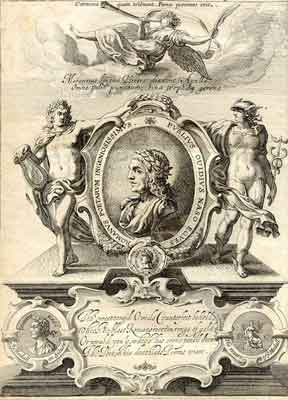
I would consider Metamorphoses to be more of an Epic Poem than a Lyric Poem. Despite that it Metamorphoses is written in dactylic hexameter (the meter usually use in epic poetry), it doesn't appeal as well to me to be called lyric poetry. The more significant meaning behind the writing in Metamorphoses is to illustrate the stories of Greek mythology. The purpose of epic poetry is to distinguish significant evens that resulted in a nation or the world. Metamorphoses explains the origins and mythology of the earth, and through Metamorphoses Ovid shows various Greek myths and how they correlate to phenomenon in our world. Therefore, defining Metamorphoses as epic poetry appeals more to me than calling it lyric poetry.
http://larryavisbrown.homestead.com/files/xeno.ovid1.htm
http://www.shmoop.com/metamorphoses/writing-style.html
Tuesday, April 13, 2010
Why was Ovid banished?

Explain why Ovid got in trouble, and determine if he got a just punishment.
During the rule of Augustus, laws were instituted in Rome that encouraged a growing birth rate, while discouraging adultery. Despite this, Ovid wrote poetry that encouraged raunchy behavior such as adultery, even outlining tips on how to effectively preform adultery in his work "Ars Amorita." The views that Ovid presented in his poetry was generally opposite to the values that Augustus promoted through law, which is most likely the reason why Augustus exiled Ovid to Tomis. However, other theories to why Augustus was exiled can apply. Ovid claimed that while his poetry earned him the Roman government's distaste, his banishment was actually implemented because of something he witnessed. Many scholars believe that he was involved in a scandalous affair with Julia the Younger, Augustus' granddaughter (who was exiled the same year). If this was true, it would have given Augustus enough incentive to exile Ovid.
I believe that Ovid did receive a just punishment for his actions. Ovid even felt that the views towards adultery in his writings were wrong for him to say, saying that the reason for his exile was because of "a poem, and a mistake," even declaring that his offense was worse than murder. This action taken by Augustus, in fact, can be seen as less of a punishment against Ovid, but more of a solution to the problem presented by his writings. Also, this punishment was considerably less consequential than executing or imprisoning Ovid.
http://www.unrv.com/culture/ovid.php
http://www.dl.ket.org/latinlit/historia/people/ovidbio.htm
http://en.wikipedia.org/wiki/File:Orvieto105.jpg with some rights reserved
Monday, April 12, 2010
The vatican will publish its instructions about pedophilia
The Vatican published an internet site on the directives of pedophilia in the catholic church, published on April 9th through the Italian agency ANSA, cited from Vatican sources. The publication underlined its principles on the web "After a three day delay, it would probably Monday," says ANSA.
Subscribe to:
Posts (Atom)