TRANSLATION:Going through the Sacred Way, in that my will was strong, reflecting on the ignorance of idle things, when all this happens: a man I only know by name runs up to me: with taking a hand 'How are you dear fellow?' 'Sweetly, which it is' saying 'and I wish you all the power you desire .' With having attended 'What do you wish?' as he still followed me. But that 'you know us' says; 'We are men of learning.' Upon this you have more of my respect. Wretchedly wanting to get away, I would swiftly walk on, occasionally stopping, speaking in the ear of my ignorant boy, sweat flowing over the last ankle. 'Oh you, Bollane, your mind does not speak fruitfully affirming! He then began to chatter with what is a skim, the row of houses, the praised city. When I didn't respond, he said "You want terribly to get away: a long time ago I saw; but I did not deliver it: even holding up the pursuit as I now left the place and walked on the way.' 'There are no needs for you to drive on, I wish to visit a friend you don’t know; going far across the Tiber to near Caesar's Garden.'' I am lazy and do not have anything, I will follow you.' 'My ears dropped like an ass of an unfair advantage, climbing a burdensome hill with heavy cargo, beginning that: 'If I am understood well, you will not find a more colorful friend in Varius of Viscum, not different faces; for what I am to be able to quickly write more verses too? Who’s limbs can move as flexibly? Even Hermogenes is jealous of me when I sing.’ Here was where I interrupted into the topic ‘have you no mother, relations, that need you alive?’ ‘Not I, each of them are at rest.’ Lucky them, now I only remain. Finish me off; for sadly this destiny presses on, when I was a child it was sung by the old Sabine that disturbed the cinerary urn: “No horrible poison nor hostile blade shall kill him, nor shall pains seize him, nor heavy coughs: the one who shall devour him must be talkative, for he shall avoid the chattering people if he is wise, growing older.”
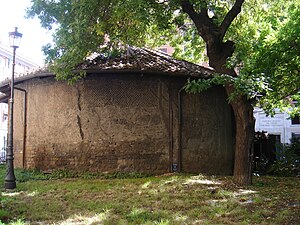
Coming to Vesta’s temple, now passing the fourth day, by chance he was due to answer a charge in court “If you love me” he says “be near me for a short while.” “Kill me if I remain strong, I lack knowing the law and I must go.” “I’m not sure,” he says, “whether to leave you or my trial.” “Please, me” “I will not” he says, and proceeds. I commence, for it’s hard to tune out when they are triumphant. “In what way do you know Maecenas?” he repeats. “That’s a sensible mind of few friends. No one is as skillfully prosperous. You’ll gain favorable support if you speak of me to this man and deliver me as I wish.” “We do not live that way. There is no house that is wealthier or smarter: I am not obliged to say, I say, that there is a place for everyone belongs where they belong.” “A great tale, hardly credible.” “It is the truth.” “You ascend my desire to get in proximity with him.” “You only have to want it: with your ideals you’ll see this: he is a person that can be seen to, yet he makes this task difficult. I will succeed, I’ll bribe him and if denounced I will continue, maybe at a better time, coming across him on the road and bringing him home. Without great labor life will surrender nothing to mortals.”
During his speech behold! Fuscus Aristius meets us, my dear friend that knows him well. We stand still. "From where are you coming from and going?" he asks and answers. I began to pluck his hands and press against his sluggish arms, twisting my eyes, so that he may snatch me away. Wickedly he laughed at me, concealing the hint. Anger burned my liver. "Surely you wish to speak of something in private." "I remember well, but I'll say at a better time: now is the thirtieth sabbath: would you insult the circumcised Jews?" "I won't" I said, "religion is.""but me: I am a little weaker, someone among many men. Pardon me; I'll speak at another time." The sun has risen so horribly upon me! He wickedly flees and leaves me under the knife." But by chance his enemy (from court) meets him and "Where to, you disgrace?" he yells with a loud voice, and "do you call as a witness?" and I verify my opposing ear. He is hurried into court; there is chaos from both sides, running from everywhere. Therefore Apollo has saved me.
25 VERBS PARSED:Ibam: 1st person singular imperfect active indicative of eo "to go"
nescio: 1st person singular present active indicative of nescio "to be ignorant"
accurrit: 3rd person singular perfect active indicative of accuro "to run; to hasten to"
agis: 2nd person singularpresent active indicative of ago "to drive"
est: 3rd person singular present active indicative of sum "to be"
adsectaretur: 3rd person singular imperfect active subjunctive of adsector "to accompany"
occupo: 1st person singular present active indicative of occupo "to seize"
Inquam: 1st person singular present active indicative of inquiam "to say
Discedere: 2nd person singular present active imperfect of discedo "to march"
Consistere: 2nd person singular present active imperfect of consisto "to stop"
Nescio: 1st person singular present active indicative of nescio "to be ignorant"
Manaret: 3rd person singular imperfect active subjunctive of mano "to flow"
Garriet: 3rd person singular imperfect active subjunctive of garrio "to chatter"
Laudaret: 3rd person singular imperfect active subjunctive of laudo "to recommend"
Respondebam: 1st person singular imperfect active indicative of respondeo "to answer"
Video: 1st person singular present active indicative of video "to see"
Tenebo: 1st person singular future active indicative of teneo "to hold"
Persequar: 1st person singular present subjunctive of persequor "to follow up"
Volo: 1st person singular present active indicative of volo "to wish"
Cubat: 3rd person singular present active indicative of cubo "to lie, recline"
Habeo: 1st person singular present active indicative of habeo "to have"
Sequar: 1st person singular present active subjunctive of sequor "to follow"
Confice: 2nd person singular present active imperfect of conficio "to finish off"
Instat: 3rd person singular present active indicative of insto "to pursue"
Dolor: 1st person singular present passive indicative of dolo "to chop into shape"
STRUCTURAL ANALYSIS SCAVENGER HUNT: 1. Plot: Horace walks along the Sacra Via. A man encounters Horace and asks him how he is doing. Horace responds back politely and continues on. The man follows him and continues to talk to him, upsetting Horace. Horace whispers to his servant while the man praises the city and the streets. The man says that he understands that Horace wants to get away from the city, and that he will follow him because he has nothing better to do. Horace continues to act negatively towards the man to ward him off but the man is stubborn and oblivious.
They walk by Vesta's temple after half a day, and the man asks Horace to join him in his trial, Horace refuses, and the man decides to persist on following Horace. The man talks about how Horace should help him get into the circle of Maecenas, while Horace explains that that is not how the circle works. Fuscus Aristus meets them and greets them, and Horace physically suggests Fuscus to help him out of the situation. Fuscus laughs at Horace and disregards his pleas, and leaves them. The mans adversary then arrives and takes the man away, and Horace volunteers himself to serve as a witness.
2. Roads resurface often in Satires 1.9, as the plot unfolds as Horace travels one. The roads that he travels on is very lengthy, such as also the talkativeness of the man who accompanies him. Horace seems to despise the road (like he despises the company of the man), and the man praises the roads and the city (suggesting that the roads endlessness is like the man's loquacity).
3. Semic: As the man continues to talk to Horace, the man seems more absorbed into his own talking and perceives Horace as in the conversation as much as he is, whereas Horace is just trying to avoid the man. During the entirety of the conversation Horace adds an annoyed note to everything he feels that the man says, to help the reader interpret how annoying this man really was.
4. The road is one symbol; it symbolizes the annoyance of the man and how extensive it is. Whenever one of status encounters the road, they would have a chance of being confronted by this man and talked to as in this situation, for the man states that he believes he can join Maecenas' circle by confronting him on the road and talking to him. Another symbol is the temple of Vesta, for it symbolized that Horace had some hope for that this man would leave him. When they passed the temple of Vesta the man explained that he was due to court and asked Horace to accompany him, which Horace refused and then begged the man to leave him. Later the man was arrested, and Horace was freed.
5. The man makes several blind references to the city, praising it's parallel houses and roads to appease Horace. This shows that wherever Horace was, the roads and buildings were probably neatly designed and parallel. Also we can guess that the street they were walking on was wide because they met someone that they were acquainted with.
6. Roman satire did not consist of practical humor or jokes being cast. Satire at the time was more or less like Shakespearian satire, such as in "The Taming of the Shrew." Satire usually consisted of an event in everyday life that the audience could relate to, with characters that the audience could relate to. An event deemed humorous in life was usually the feature of the satire, and in this case the annoying antagonist was dismissed back to court. This satire was also rich in irony, as whenever Horace subtly suggested the man to leave him the man would interpret it as something entirely different.