Friday, January 8, 2010

Seven Wonders of the Modern World


In addition to the seven wonders of ancient world, a new list of the new seven wonders has been compiled. Here they are:

Giza Pyramid - Cairo, Egypt
Chichen Itza - Mexico
Christ the Redeemer Statue - Rio De Janeiro, Brazil
Colosseum - Rome, Italy
Great Wall of China - China
Machu Picchu - Peru
Petra - Jordan
Taj Mahal - India

http://www.new7wonders.com/n7w

Wednesday, January 6, 2010

Latin Meter

This website can be pretty useful if you are still confused on how poets (such as Catullus) use meter in their poetry. It includes everything you need to know about dactyls, and how syllables can be long under certain conditions. Ellison is also mentioned in this PDF file. Elision can pretty confusing, considering that elision can eliminate a syllable in certain meters by combining two words into a larger, less pronounceable word. It is important to know when to allide because messing up on elision early in a line will most likely lead you to mess up the rest of the line. This website can help you determine good tricks of the trade of eliding and scansion in general.

http://www.tc.umn.edu/~lovel012/3300/meter.pdf

Monday, January 4, 2010

Catullus: ad Cornelium

Who do I present this charming new little book polished with a dry pumice stone? Cornelius: to you, for you were accustomed to think to some degree to ponder on truffles. Go then, with intending on you alone for all of Italy

verb parsing
dono: 1st person singular present active indicative of dono "to give"
solebas: 2nd person singular imperfect active indicative of soleo "to be accustomed to"
esse: present active infinitive of sum "to be"
explicare: present active infinitive of explico "to unfold"
habe: 2nd person singular present active imperative of habeo "to have"

Horace 1.5 translation

What thin young man bathed in liquid scent treads over roses,dear Pyrrha, under caves? Who binds her yellow hair, with a simple elegance? Oh how we weep as faith and the gods change, wondering at how strange the winds enrage the black seas. Who now is credulous to delight in your gold, who is always vacant, always hoping for worthiness to be loved, unaware of treacherous winds. It is unfortunate, for the untried were glittered. I bear sacred writing tablets declaring to vow to God as I suspend my soaked garments from the sea.

Tuesday, December 29, 2009

Seven Wonders of the Ancient World


These are the seven wonders of the Ancient World. The only one that Still remains is the great Pyramid of Giza:

The Great Pyramid of Giza 2500 BC Approximate - Egyptians

Hanging Gardens of Babylon 600 BC - Babylonians - Destroyed Earthquake

Temple of Artemis at Ephesus 550 BC - Anatolians - Destroyed Fire 356 BC

Statue of Zeus at Olympia 435 BC - Greeks - Destroyed Fire

Mausoleum of Halicarnassus 315 BC - Hellenized Carians - Destroyed Earthquake

Colossus of Rhodes 292-280 BC - Hellenistic Civilization - Destroyed 224 BC Earthquake

Lighthouse of Alexandria 3rd Century BC - Hellenistic Civilization - Destroyed Earthquake

http://www.crystalinks.com/seven.html

Pan


Pan is the companion of the nymphs in Greek mythology, god of shepherds and flocks, of mountain wilds, hunting and various forms of music. His name originates within the Greek language, from the word paein, meaning "to pasture". He has the legs and horns of a goat, and is considered small in stature. With his homeland in rustic Arcadia, he is recognized as the god of fields, groves, and wooded glens; because of this, Pan is connected to fertility and the season of spring. He is also my second favorite Disney character, my favorite being Mulan's mom.

Maxmillon


Maximon (pronounced Mashimone) is a saint in Guatemalan legend that is worshiped by cult. Maximón is believed to be a form of the pre-Columbian Maya god Mam, blended with influences from Catholicism. Maximón may also be called San Simón. Originally, he was believed to be a Catholic priest who had looked after aboriginals during early 1600s.
He is represented by an effigy which resides in a different house each year, being moved in a procession during Holy Week. During the rest of the year, devotees visit Maximón in his chosen residence, where his shrine is usually attended by two people from the representing Cofradia who keep the shrine in order and pass offerings from visitors to the effigy. Worshippers offer money, spirits and cigars or cigarettes to gain his favour in exchange for good health, good crops, and marriage counseling, amongst other favours. The effigy invariably has a lit cigarette or cigar in its mouth, and in some places, it will have a hole in its mouth to allow the attendants to give it spirits to drink. I got to saw a Maximon ceremony myself when I visited Guatemala in the town of Santiago Atitlan, and it was pretty interesting.

http://www.luckymojo.com/maximon.html

Terra Cotta Soldiers


The infamous Terra Cotta soldiers belonged to the tomb of Qin Shi Huang, the first emperor of China, in order to guard him into the afterlife. The terracotta figures were discovered in 1974 by some local farmers near Xi'an, Shaanxi province, China, near the Mausoleum of the second Ming Emperor. The figures vary in height according to their role, the tallest being the generals. The figures include strong warriors, chariots, horses, officials, acrobats, strongmen, and musicians. Current estimates are that in the three pits containing the Terracotta Army there were over 8,000 soldiers, 100 chariots with 400 horses and 300 cavalry horses, the majority of which are still buried in the pits. They were suspected to be constructed because of the emperor's paranoia that all the people he killed in his lifetime would haunt him in death.

http://www.nationalgeographic.com/terracottawarriors/

Knights Templar


The Knights Templar were among the most famous of the Western Christian military orders. The organization existed for two centuries in the Middle Agesand were endorsed by the Roman Catholic Church around 1129. They became a favored charity throughout Christendom, and grew rapidly in membership and power. They also consisted of their distinguishable Templar knights, bearing white mantles with a red cross, were among the most skilled fighting units of the Crusades. In 1307, many of the Order's members in France were arrested and tortured to death because of their involvement in the crusades, which eventually led to the Templar being dumped by the church.

http://www.templarhistory.com/

Druids


Druids were priests in Gaul, and perhaps in Celtic culture more generally, during the final centuries BCE. They were suppressed by the Roman government from the 1st century CE and disappeared from the written record by the 2nd century, although there may have been later survivals in Britain and Ireland. They are noted of in the legends of St. Patrick in particular, which means they must have existed past BC. Little contemporary evidence about druids exists, and thus little can be said regarding them with assurance. It is known that they held the cultural repository of knowledge in an oral tradition, using poetic verse as a mnemonic device and to ensure the fidelity of the transmission of knowledge over time. Most of what is known about them comes from the Roman writers. Similar to the monks of the Christian era following, they combined the duties of priest, judge, scholar, and teacher. The core points of druidic doctrine reported in Roman sources is their belief in metempsychosis, and their practice of human sacrifice.

http://www.lost-civilizations.net/celts-druids.html

Oracles


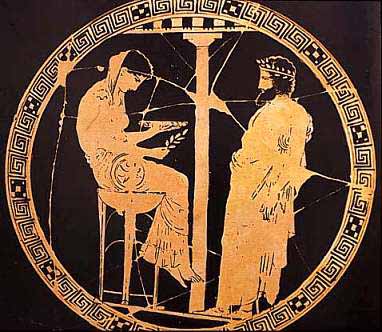
Oracles were people considered to have wise and prophetic visions. The earliest tradition of oracular practice in Hellenic culture is from the Archaic period shortly after arrival of the Hellenes in their current place of settlement c. 1300 BC. The oracle was associated with the cults of deities derived from the great goddess of nature and fertility, the preeminent ancient oracle operated at the Temple of Apollo at Delphi. Oracles were thought to be portals through which the gods spoke to man. In this sense they were different from seers (manteis in Greek) who interpreted signs sent by the gods through bird signs, animal entrails, and other various methods.

http://www.pantheon.org/articles/o/oracle.html

Priory of Scion


The Priory of Sion is a name given to multiple groups, both real and fictitious. The most notorious is a fringe fraternal organization, founded by Pierre Plantard in 1956. In the 1960s, Plantard created a fictitious history for that organization, describing it as a secret society founded in the Kingdom of Jerusalem in 1099, which serves the interests of the Merovingian dynasty and its alleged bloodlines. This myth was expanded upon and popularized by the 1982 controversial book The Holy Blood and the Holy Grail, and later claimed as factual in the preface of the 2003 conspiracy fiction novel The Da Vinci Code. Even though the Priory of Scion was mainly fake, many conspiracy theorists persist in believing that the Priory of Scion still hides a secret.

http://www.fiu.edu/~mizrachs/poseur3.html

Ulysses (James Joyce)


Ulysses is a novel by James Joyce, and is one of the most important books in modernist literature. Ulysses chronicles the passage of character Leopold Bloom through Dublin during June 16, 1904. The title parallels and alludes to Odysseus (translated into Ulysses in Latin), the hero of Homer's Odyssey. Ulysses totals about 265,000 words from a vocabulary of 30,030 words, divided into 18 "episodes". Ulysses' stream-of-consciousness technique, careful structuring, and experimental prose—full of puns, parodies, and allusions, as well as its rich characterizations and broad humor, made the book a highly regarded novel in the Modernist pantheon. In 1999, the Modern Library ranked Ulysses first on its list of the 100 best English-language novels of the 20th century.

Ulysses on project Gutenburg

Ephors: Pimply Sages at the beginning of 300


I wanted to know if Sparta actually relied on the oracles that would predict if a king should go to war or not, the sages that were in 300 that were paid to tell Leonidas that he would lose. These are actually called Ephors, and were 5 elected officials that gave advice to the king while not being under his rule. However, they were not described as being "inbred swine" as indicated by the dialogue in 300, which was just another exaggeration on the battle of Thermopylae.

Freemasons


The Freemasons are a fraternal organization that arose in the late 16th to early 17th century. Freemasonry now exists in various forms all over the world, with a membership estimated at around 5 million, including just under two million in the United States and around 480,000 in England, Scotland and Ireland. The various forms all share moral and metaphysical ideals, which include, in most cases, a constitutional declaration of belief in a Supreme Being.

The fraternity is administratively organized into Grand Lodges or sometimes Orients, each of which governs its own jurisdiction, which consists of subordinate (or constituent) Lodges. Grand Lodges recognize each other through a process of landmarks and regularity. Freemasonry uses the metaphors of operative stonemasons' tools and implements, against the allegorical backdrop of the building of King Solomon's Temple.

http://freemasonry.org/

Hun Warfare


Hun warriors fought exclusively as cavalry units, and their warriors relied on the mobility of their horses and the penetration power of their composite bows. They were steppe people, so they were also natural warriors, having to be skilled in shooting bows and riding on horseback. On the battlefield, the Huns would fire a shower of arrows, inflicting casualties in long range. As enemies try to close in they would gallop away while turning their bodies and firing their bows at the enemy. Many Europeans, barbarians especially, were unused to such hit and run tactics, and thus were at a disadvantage. The proficiency of Hun warriors made them a popular choice as mercenaries. The Hun mercenary force was decisive in victory of the East Romans over the West Romans in the battle of Sisca in 388. Nobles usually wore armor, most likely scale armor, while regulars wore little or none. Shields and helmets were commonly issued to all warriors alike. Besides their famed composite bow, the Huns also occasionally carried swords, lances, and other irregular weapons such as lassos.

http://www.allempires.com/article/index.php?q=huns

Disease in Ancient Rome

Roman society was separated into caste, with slaves and freed slaves at the bottom of the social hierarchy. The amount of slaves and free slaves compared to the other wealthier populations of Rome was 95% of the population, while rich and moderately wealthy Romans made up 5%. For these residents, living conditions were very poor. Their neighborhoods were squalid, dangerous, and cramped. Instead of single-family dwellings, the urban poor lived in high-rise apartment styled buildings which were, at best, equipped with communal latrines and water-fountains. It is estimated that in the early Empire apartment buildings in Rome outnumbered single-family dwellings by a ratio of 26:1. Because of overcrowding, poor sanitation, and generally poor nutrition, diseases were rampant among Rome’s urban masses whose life span was restricted.

http://www.innominatesociety.com/Articles/Death%20and%20Disease%20in%20Ancient%20Rome.htm

The History of Candy Canes


The Candy Cane was not first invented merely for a decoration for Christmas purposes. In about 1670 a choirmaster at the Cologne Cathedral in Germany would give out sticks of candy bent into the shape of a shepherd’s crook to children who attended church in order to occupy them and keep them from talking, despite the canes being made entirely from sugar products. This became a popular tradition, and eventually the practice of passing out the sugar canes spread throughout Europe. The use of candy canes on Christmas trees made its way to America by the 1800’s, however during this time they were still pure white. It wasn't until the early 20th century that they appeared with the red stripes that they have today, and from there on candy canes became staples for Christmas celebrations.

http://www.noelnoelnoel.com/trad/candycane.html

Arch of Titus


The Arch of Titus is a Pentelic marble arch located on the Via Sacra south-east of the Forum in Rome. It was constructed by Domitian shortly after the death of his older brother Titus, commemorating the capture and sack of Jerusalem in 70, which effectively terminated the Jewish War that began in 66. The Arch of Titus has provided the general model for many of the triumphal arches erected since the 16th century.

http://penelope.uchicago.edu/~grout/encyclopaedia_romana/romanurbs/archtitus.html

Rome's Current Government


Italy is politically in a framework of a democratic, parliamentary republic, while also being a multi-party system. Executive power is exercised collectively by the Council of Ministers, which is led by the President of the Council. Legislative power is vested in the two houses of parliament primarily, and secondarily on the Council of Ministers. The judiciary is independent of the executive and the legislative branches. Italy has been a democratic republic since 2 June 1946, when the monarchy was abolished by popular referendum. The current President of the Italian Republic is Giorgio Napolitano.

http://library.thinkquest.org/J0112187/italy_government.htm

The origin of Christmas Trees


In the 7th century a monk from Crediton, Devonshire, went to Germany to teach God's word. Legend has it that he used the triangular shape of the Fir Tree to describe the Holy Trinity of God the Father, Son and Holy Spirit. The converted people began to revere the Fir tree as God's Tree. By the 12th century the Christmas tree was being hung, upside-down, from ceilings at Christmastime in Central Europe, as a symbol of Christianity. If you think that Americans seemed to act like drunk men having pine trees inside their houses (reference to Jim Gaffigan joke), at least we don't have them upside down.

http://www.christmasarchives.com/trees.html

Sundial


A sundial is a statue that measures daytime by the position of the sun, indicated by the shadow cast on the horizontal pedestal of the sundial. Usually a triangular shaped metal or stone protrudes from the dial so that the shadow of it may be cast on a engraved time on the pedestal. The designs rely on the sundial being aligned with the axis of the Earth's rotation. If such a sundial is to tell the correct time, the style must point towards the North.

http://www.fi.edu/time/Journey/Sundials/aboutsd.htm

Genghis Khan


Genghis Khan was the Khan (ruler) of the Mongolian Empire, coming to power by forming the Mongolian Empire by uniting many different tribes around northeast Asia. Eventually he headed many Mongolian invasions that had him occupy a substantial portion of Asia and China. His Empire was one of the world's largest Empires in human history.

http://www.fsmitha.com/h3/h11mon.htm

E Pluribus Unum


E Pluribus Unum, Latin for "One out of many", is a motto founded in 1776 for usage on the Seal of the United States, along with Annuit coeptis and Novus ordo seclorum, and adopted by an Act of Congress in 1782. The phrase originally came from Moretum, a poem attributed to Virgil but with the actual author unknown. In the poem text, "color est e pluribus unus" describes the blending of colors into one. A different account was put forward in the Discovery Channel program "Secret America".

http://www.greatseal.com/mottoes/unum.html

Monday, December 28, 2009

Hygene and bathing in Ancient Rome


Roman houses had water supplied via lead pipes. However, these pipes were taxed according to their size, so many houses had just a basic supply and could not hope to rival a bath complex. Therefore for personal hygiene, people went to the local baths. The local bath complex was also a gathering point and served a very useful community and social function. Here people could relax, keep clean and keep up with the latest news. Taking a bath was not a simple chore. There was not one bath to use in a large complex such as the one at Bath. A visitor could use a cold bath (the frigidarium), a warm bath (the tepidarium) and a hot bath (the caldarium). A visitor would spend some of his time in each one before leaving. A large complex would also contain an exercise area (the palaestra), a swimming pool and a gymnasium. One of the public baths at Pompeii contains two tepidariums and caldariums along with a plunge pool and a large exercise area.

http://www.vroma.org/~bmcmanus/baths.html

Ancient Roman Hairstyles


Roman hairstyles are characterized by being intensively elaborate. Although young girls might merely gather their hair into a bun at the back or form it into a coiled knot at the top of the head, the hairstyles of the married upper class were more elaborate. This changed to hair arranged in layers, with an abundance of ringlets falling to the sides. Assisted by expert hairdressers and augmented with false hair and wigs, the Roman women spent much time and effort on their hair. They also had hair dyes and bleaches. Using polished metal in place of mirrors, Roman women would often dye their hair a golden-red, adding to the thickness and length with hairpieces, and holding it together with jeweled hairpins.

Eventually hair saw elaborate built-up creations, giving them both height and complication that were unmatched until centuries later in the French court of Louis the XVI. So concerned with fashion styles, they had removable hairstyles for their portrait busts so that they would be remembered at the height of fashion.

http://www.roman-colosseum.info/roman-clothing/roman-hairstyles.htm

The origins of currency and Numismatics


The origin of currency is the creation of a circulating medium of exchange based on a unit of account which quickly becomes a store of value. Currency evolved from two basic innovations: the use of counters to assure that shipments arrived with the same goods that were shipped, and later with the use of silver ingots to represent stored value in the form of grain. Both of these developments had occurred by 2000 BC. Originally money was a form of receipting grain stored in temple granaries in Sumer in ancient Mesopotamia, and then followed to Ancient Egypt and Ancient Rome.

http://currency-history.blogspot.com/

Donatello


Donatello was a famous Renaissance artist known for several works, including the sculpture of the youthful David in Florence. A less famous work in the city is the brass pulpits he helped to decorate for the Old Sacristy of San Lorenzo, built by Brunelleschi. Like Masaccio, Donatello was one of the earliest artists working with the idea of perspective. His method dealt mainly with sculpture and he brought dramatic shapes to life with his skills.

What would my Roman name be


I would probably go by Dimitri if I lived in Rome, for a various number of reasons. I don't even care if there is a Roman name for Ben, because in Spanish my name is Benjamin (pronounced Ben-hamin) and that ain't gonna cut it. Here's why I'll be Dimitri:

1. Name of main character in the Russian side of Call of Duty 5
2. Name of a very funny comedian, Dimitri Martin
3. Name of a Greek butcher that comes to my house 1-2 times a year to slaughter our male lambs, who in turn pays us for them and serves them to us when we go to his restaurant "Acropolis" in little Greece in Baltimore. delicious!

Enemy Leaders of Rome

Enemy Leaders of Rome

390 - 387 BC Brennus - Gauls
320's BC Gaius Pontius - Samnites
280 - 275 BC Pyrrhus - Epirus
261 - 242 BC Hamilcar Barca, Hannibal Gisco - Carthage
218 - 202 BC Hannibal Barca - Carthage
190's BC Philip V - Macedonia
190's BC Antiochus III - Seleucia
171 - 168 BC Perseus - Macedonia
147 - 139 BC Viriathus - Lusitania
110 - 106 BC Jugurtha - Numidia
73 - 71 BC Spartacus - Slave Revolt
70's - 60's BC Mithridates VI - Pontus
50's BC Vercingetorix - Gauls
9 - 16 AD Arminius - Germanics
60's AD Boudiccea - Iceni
100 - 105 AD Decebalus - Dacians
243 - 260 AD Shapur I - Persia
250's AD Cuiva - Goths
270's AD Zenobia - Palmyra
400 - 410 AD Alaric - Visigoths
440's - 450's AD Attila - Huns
450's - 460's AD Geiseric - Vandals


Did you know?

Pax Romana, Latin for "the Roman peace", is the long period of peace experienced by states within the Roman Empire. The term stems from the fact that Roman rule pacified regions which had suffered from the quarrels between rival leaders. During this time Rome still fought a number of wars against neighbouring states and tribes, however it was an era of relative tranquillity, in which Rome endured neither major civil wars nor serious invasions.

Roman Slavery


Though being a social and moral wrong, slavery in the ancient world and in Rome was vital to both the economy and even the social fabric of the society. While it was commonplace throughout the Mediterranean region, and the Hellenistic regions in the east, it was not nearly as vital to the dominance of Rome. As the Romans consolidated their dominance of Italy and Sicily followed by the systematic conquest of western Europe, countless millions of slaves were transported to Rome the Italian countryside and Latin colonies all over Europe. Like in colonial America, slavery had it's greatest effects in the Roman countryside. As more slaves came into play, they slowly replaced the working class and sent many people out of business, which led to a destabilization of the Roman social system and the eventual fall of the Roman Republic.

http://www.unrv.com/culture/roman-slavery.php

Roman Drugs and Medicine


There were few successes in the use of medication in the ancient world. However, the Romans had an excellent knowledge of anesthetics but all other so called 'cures' were developed through practices as similar as mixing poisons through alchemy. In fact, as simple sickness was so difficult to determine by the average doctor, many deaths in the ancient world were attributed to poisoning. This paranoia led to the development of many antidotes, some of which worked, and others that didn't, but much of the research provided valuable information for later doctors. Opium poppies (morphine), henbane seeds (scopolamine) and mandrake were used extensively, probably because pain was so frequent in medical treatments. There was a reason to fear the doctor back then.

http://www.unrv.com/culture/drugs-pharmaceuticals.php

Vomitoriums


Vomitoriums were passages behind seats at an amphitheater where audience members would be able to go to throw up if the show took a turn for the worst. They were also commonly used by very snobby rich people, who would gorge themselves on food and then thrown it up so that they could eat even more. The vomit was reported to be used in tannery pits to remove fat and muscle from animal skins. Just saying.

http://www.associatedcontent.com/article/324675/weird_history_revealed_vomitoriums_.html?cat=37

Brunelleschi: an architect of the Italian Rennaisance


Brunelleschi is best known as an architect that made the cupola of the Florence cathedral. The Duomo of Florence has become the symbol of Florence, being a symbol of the wealth and civic pride of the affluent families of the city during the Renaissance. The church, on which construction began in 1299, is crowned by the massive dome designed by Brunelleschi almost two centuries later. This building did not have a roof for 175 years because it posed a major architectural challenge with the large area the dome had to span. There are 463 steps to climb up the dome to view the city below. Seven of the great artists of Florence, including Brunelleschi and Donatello, competed for the opportunity to make doors for the cathedral as well. Beyond his abilities as an architect, Brunelleschi was recognized for using geometric principles in creating perspective and influencing both Masaccio and Donatello to follow his techniques.

http://www.yesnet.yk.ca/schools/projects/renaissance/brunelleschi.html

http://en.wikipedia.org/wiki/File:Bunelleschi.jpg

Scrolls: better than tablets!


Scrolls were the first form of editable record keeping texts, used first in Eastern Mediterranean and ancient Egyptian civilizations. The first use of scrolls in the recordings of literature date back to the parchment scroll used by Israelites after Sinai, before the codex or bound book with pages was invented by the Latins in the first century CE to differentiate their usage from that of the Judeans who were recently conquered. In Roman usage the scrolls were written latitudinally, usually placed on podiums with roll holders from which the rolls were unwound. The Romans eventually found the scroll too cumbersome for lengthy works and developed the codex, which influenced the modern book.

http://penelope.uchicago.edu/~grout/encyclopaedia_romana/scroll/scrollcodex.html

Candles in Roman and Ancient times


The Egyptians used wicked candles in 3,000 B.C. These candles were made from tallow extracted from cattle and sheep. These early candles did not burn well, probably because the fumes they gave off from burning smelled bad. However, the Roman Empire can be credited for making the first candle similar to what we have today. They melted the tallow until it was a liquid and poured it over fibers of flax, cotton, and hemp. These materials were used as a wick for the candle, obiously. The candles provided light in religious ceremonies and also were a source of light when traveling and in the home.

http://candles.lovetoknow.com/The_History_of_Candle_Making

Roman cuisine


For most people in Ancient Rome, meals centered around grains (corn), wine and oils (olive oil), and different types of exotic foods for the wealthy. Cereals were the norm, originally in the form of husked wheat (far) being made into porridge (puls), but later naked wheat (frumentum) was made into bread. Bread was the single most often eaten food in Ancient Rome, and was sometimes sweetened with honey or cheese and eaten along with sausage, domestic fowl, game, eggs, cheese, fish, or shellfish.

Fish and oysters were also very popular and pork was in high demand as well. Elsewhere in Rome, delicacies, such as snails or dormice, were specially bred. A variety of cakes, pastries, and tarts was baked commercially and at home, often sweetened with honey. Vegetables, such as cabbage, asparagus, onion, garlic and beats was imported. Fruits and nuts were also available to the consumer, as was a variety of strongly flavored sauces, spices, and herbs, which became very popular in Roman cuisine.

http://library.thinkquest.org/26602/diet.htm

Lorenzo Ghiberti


Lorenzo Ghiberti was an Italian artist that lived during the time of the Renaissance, mainly known for his works in metalworking and sculpting. Born in Florance and later moving to Romangna to escape the Bubonic Plague, he became famous in 1401 for completing the first set of bronze doors for a cathedral in Florence. On the doors for the church he depicted scenes from the Old Testament and New Testament that attracted many famous artists such as Donatello, Masolino, Michelozzo, Uccello, and Antonio Pollaiuolo. He was also a historian that would actively spread humanist ideas through his actions. At the age of 77, Ghiberti died in Florance.

http://www.haberarts.com/ghiberti.htm

Friday, December 11, 2009

Practice Test that is graded so its not really practice

1.) Translate Horace 1.11
Do not seek (knowing sin) who I am, what you surrender to God's limits, Luconi, nor do not test the Babylonian strength. Whatever will be good will suffer! Or if more winters will be present or if it will be the last, whether now the Tyrrhenum sea plummets against the pumice stone, have sense, strain the wine, and cut back on having hope for short times. As long as I speak, flee from hostile times: seize the day, and have little trust for the future.

2.)The gospel of Matthew in the Vulgate begins by tracing back the genealogy of Christ back to Abraham, while the gospel of Luke consists of dating back to the reign of King Herod and citing directly to the birth of John the Baptist, from starting with Zachariah and Elizabeth before John the Baptist was born, and extends to the scene of John the Baptist baptizing Jesus. The gospel of Matthew speaks of the birth of Jesus, and Joseph fleeing to Egypt with Mary and Jesus to escape Herod. Luke is also addressed to Theophilus.

3.) Verbs parsed from 1.11 Horace
quaesieris: 2nd person singular perfect active subjunctive of quaero "to search for"
dederint: 3rd person plural perfect active subjunctive of do "to give"
temptaris: 2nd person present passive indicative of tempto "to test"
erit: 3rd person singular future active indicative of sum "to be"
tribuit: 3rd person singular present active indicative of tribuo "to divide"

4.)Proairetic interpretation is interpreting narrative by plot. Semic analysis is analyzing narrative by observing connotations within a plot. Hermeneutic is interpreting parallels in literature, and can also extend to suspense. Symbolism is another means which is pretty basic, noting symbols that occur in narrative and understand their meanings. Reference interpretation is seeing how a story's elements or themes pertain to the outside world or outside concepts, such as popular culture. Diagetic analysis is interpretation that relies on grammatical elements such as mood and tone to identify messages conveyed in literature. An example of this in movie mediums are the shade of a set.

5.)5 strong sources for researching any one of these authors are:

Wednesday, December 9, 2009

Bagpipes!


Bagpipes were not originally from Scotland. The roman term for bagpipes is askaules, (combing the Greek words aulos + askos). They were known in Italy by the second century B.C., though it is hard to see where they came into Roman society as they are rarely mentioned in Latin literature. Martial references them in his Epigram as does the author Dio Chrysostom (“and they say that he is skilled…to play the pipe with his mouth, on the bag placed under his arm-pits, Orat. 71.9), and Suetonius mentions them as well relating Nero’s future plans to give a performance as a bagpiper. Maybe Nero was playing bagpipes during the fire of Rome instead. We will never know!

http://www.unrv.com/culture/roman-musical-instruments.php

Tuba (Roman instrument similar to our Tuba)


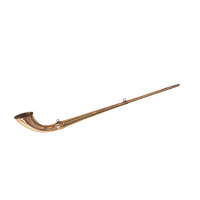
The Roman tuba was a long, straight horn usually made of bronze and averaging about four feet long and had a detachable bone mouthpiece. It was brought into military prominence around 500 B.C., and was used to signal for charge and retreat and changing of the guard. Its use was continued for many centuries afterward. It was mentioned early in literature, such as from Emmius, but was not prominent in art until the first century B.C.

http://www.unrv.com/culture/roman-musical-instruments.php

Roman dog names?


Skipper or Fido were not used back in the Roman times, contrary to popular opinion (I AM POPULAR OPINION). Instead, they used less memorable titles to distinguish their dogs from the rest. Here are some names, found in literature and popular roman culture.

Celer (male) "Speedy". A recommended dog name in Columella’s On Agriculture.

Dromas (male) "Runner". One of Actaeon's hounds in Ovid's Metamorphoses.

Ferox (male) "Savage". A recommended dog name in Columella’s On Agriculture.

Lachne. f. "Shaggy". One of Actaeon's hounds in Ovid's Metamorphoses.

for more fun names, visit http://www.unrv.com/culture/names-for-roman-dogs.php!

Roman Clothing: not just Togas


Togas were not the only clothing that Romans wore in ancient times. The toga was only used usually as a public display garment, while the tunic was more common in other situations where people wore clothes. Tunics were short woolen undergarments with short sleeves. It was usually worn openly by working men and slaves, though was commonly worn under togas in public or by itself in the home. Today, we might no wear tunics in these situations; instead we wear wife-beaters. Tunics are basically wife-beaters with sleeves.

http://www.unrv.com/culture/ancient-roman-clothing.php

Thursday, November 26, 2009

The history of Glassblowing


Glassblowing originated from the ancient art of glass forming, which dates back to 50 B.C. Glass was discovered around 2500 B.C., yet back then it was not made with the art style that it is crafted with today. Glass was mainly crafted for the purpose of vessels for holding liquids and foods, yet once the hand blown glass process was uncovered and better understood it became widespread and started to become an art form.

Handblown glass became popular with the rise of the Roman Empire. As glass blowing became well known, its usefulness and beauty made it desirable worldwide. Different religions, regions, and cultures adapted it for different needs, and hand blown glass works quickly became a favorite regardless of how the were used.

http://www.handblownglass.net/Hand-Blown-Glass-History

The Die: Roman Gambling


Gambling existed in Rome before many other civilizations. The Circus Maximus was a well known place to gamble, where throwing die was usually called "casting lots" (even referenced in the Bible, where Roman soldiers casted lots over Jesus' garments when he died). This bronze gaming die dates back to the Ancient Roman Empire and features impressed dots for numbers on each of the six faces. Smaller than our present-day die, these little dice were popular with troops as they gambled and played a variety of wagering games to stave off boredom while on long military campaigns.

http://www.paleodirect.com/r047.htm

Cargo of Sunken Ship linked to Ancient Temple


An ancient shipwreck off the west coast of Turkey was investigated by archaeologist Deborah Carlson during 2005 and 2006. The shipwreck was one of five others found in Kizilburun in 1993 on a survey of Turkey's Aegean coast by the Institute of Nautical Archaeology at Texas A&M University, where Carlson is employed. This shipwreck's cargo consisted of columns and marble, that were later linked to the construction of the Claros temple 2000 years ago. In addition, Carlson and her archaeologists were also able to determine the origins of the marble that was to be used for the temple; a marble quarry 200 miles away on an island in Turkey's Sea of Marmara.

http://news.nationalgeographic.com/news/2009/02/090223-roman-shipwreck-turkey-missions.html

Tuesday, November 24, 2009

Biography on Hannibal


Hannibal was born in 247 B.C. in Carthage at a time when Carthage was suffering losses from the first Punic War. His father was Hamilcar Barca, and when he was eight he left Carthage with his dad on his campaigns to conquer Spain. He grew up to hate the Romans, and until he was 25 he served as a military leader under his brother-in-law, Hasdrubal. In 221 Hasdrubal died, and he was elected by the Carthaginian army as Commander in Chief. During territorial advances of the Carthaginian army he clashed with the Roman army, starting the First Punic War. He is noted to have had a long journey across the alps to Italy with a large army, which was believed to have lost 15,000 men along the way. However, he did not march straight to Rome, but succeeded in taking several victories over Roman forces. By the time he fought Rome, the battle ended up as a failure for Carthage and most of his allies deserted him. Eventually he was forced back to his own front and was defeated, and agreed with a treaty with Rome. He became the chief magistrate of Carthage, but was later sacked by Rome because he wished to continue issues between Rome and Carthage. He escaped to Syria and fought with Antiochus, but lost against Rome again, where he committed suicide.

http://looklex.com/e.o/hannibal.htm
http://www.livius.org/ha-hd/hannibal/hannibal.html
http://www.sacklunch.net/biography/H/Hannibal.html

Monday, November 23, 2009

Catacombs of Paris


The Catacombs of Paris are a series of underground necropolises that lie under the city of Paris. The Catacombs are a section of renovated stone mines that have been used to dispose of human skeletal remains in the 1700s, later being reassembled into an elaborate ossuary consisting of bones and skulls lining the walls of the catacombs. In the Roman times of Paris, the dead were usually buried in the outskirts of the cities. However, by the 10th century, population problems caused cemeteries to pop up in cities, and eventually population got so out of hand that bodies had to be buried in mass on several occasions.

Catacombs of Paris museum

Friday, November 20, 2009

In parte operis mei licet mihi praefari, quod in principio summae totius professi plerique sunt rerum scriptores, bellum maxime omnium memorabile quae unquam gesta sint me scripturum, quod Hannibale duce Carthaginienses cum populo Romano gessere. Nam neque ualidiores opibus ullae inter se ciuitates gentesque contulerunt arma neque his ipsis tantum unquam uirium aut roboris fuit; et haud ignotas belli artes inter sese sed expertas primo Punico conferebant bello, et adeo uaria fortuna belli ancepsque Mars fuit ut propius periculum fuerint qui uicerunt. Odiis etiam prope maioribus certarunt quam uiribus, Romanis indignantibus quod uictoribus uicti ultro inferrent arma, Poenis quod superbe auareque crederent imperitatum uictis esse. Fama est etiam Hannibalem annorum ferme nouem, pueriliter blandientem patri Hamilcari ut duceretur in Hispaniam, cum perfecto Africo bello exercitum eo traiecturus sacrificaret, altaribus admotum tactis sacris iure iurando adactum se cum primum posset hostem fore populo Romano. Angebant ingentis spiritus uirum Sicilia Sardiniaque amissae: nam et Siciliam nimis celeri desperatione rerum concessam et Sardiniam inter motum Africae fraude Romanorum, stipendio etiam insuper imposito, interceptam.

I say that I am allowed to bear labor, which in the beginning all of it is mostly the business of writers, when at a time I shall carry the memory of great wars in writing,

do this! (reminder to myself)

http://www.thelatinlibrary.com/cicero/att1.shtml

http://www.thelatinlibrary.com/livy/liv.21.shtml

http://www.thelatinlibrary.com/bible/job.html#9

Tuesday, November 17, 2009

My Hero: Tank Williams

Hank Williams was a drug dealer for 20 years in the Bronx, having a drug ring that relied heavily on cocaine and heroin exports from Southeast Asia during the period of the Vietnam War. When the war was resolved, Hank's drug ring instantly dried up and his associates were angry with him. When he decided to leave the business and start a family with his fiance, his associates found him and killed his wife, then concealed him in a room filled with yellow jackets exposed to radioactive matter, knowing that he was allergic to yellow jackets. He was stung multiple times, but did not die despite that one sting would guarantee his death. Instead, he got an adrenaline rush from it and he gained permanent superhuman powers, abilities granting him superhuman strength as long as yellow jacket venom was in his bloodstream. Like Popeye has spinach, Hank Williams has yellow jackets, and became Tank Williams because of his superhuman strength. Now he hunts drug dealers and those that killed his family.

Monday, November 16, 2009

Lyric Poetry

Lyric Poetry is songlike poetry which emphasizes the feelings of the author, and is usually put into a heroic perspective. Lyric poetry can be any length of poetry, as length is relative. Apollo is the guardian of lyric poets.

Wednesday, November 11, 2009

Christianity meets Mythology!


Mythology and Paganism preceded Christianity, so it was natural for Christianity to be influenced by these ancient beliefs. One example of this is through Christian Mythology, stories from religious narrative told through a religious perspective. These things probably did not happen, such as the story of Jonah and the Leviathan, but they were only depicted in this fashion to prove a broader point with more appeal. Mythology was full of appeal with the story of the universe under the Pantheon of Mt. Olympus, and Christianity probably sought to gain appeal by this type of narrative.

Story of Jonah and Leviathan, Jonah 1:17, 2:10

William Shakespeare and Ovid's Metamorphasis


William Shakespeare was influenced by Ovid's book of poems called Metamorphoses to a large extent, for he references to it in some of his most famous works. The story of Pyramus and Thisbe was an influence behind the story of Romeo and Juliet, and a play for Pyramus and Thisbe is preformed by a group of actors for a wedding in Midsummer Nights Dream. Shakespeare has also frequently referenced to occurrences in mythology in character speech. However, Shakespeare's take on Pyramus and Thisbe was comedic in Midsummer Night's Dream when acted out by the amateur actors.

Skakespeare's Ovid: Analysis of Shakespeare's use of Metamorphoses in his works

Thursday, November 5, 2009

The Story of Narcissus: Structural Analysis in Ovid's Metamorphoses

Structural Analysis of Ovid: Story of Narcissus
Literature can often be interpreted differently among various readers; ultimately the author has limited effect on how their writing is interpreted. The interpretation of some types of literature are debated more often than others. This is usually dependant on how a piece of literature can apply to different situations. Broad pieces of literature, such as mythology, can be interpreted in a variety of ways because these stories typically in relatively abstract terms try to explain why events occur or why humans have particular traits. An example of literature that can be interpreted unrestrictedly is that of Ovid’s analysis of transformations through mythology in his series of poems entitled Metamorphoses. One such poem, “The Story of Narcissus,” is written to capture some common themes of of life, and therefore can be interpreted many different ways. Through reading Ovid’s poetry and interpreting various aspects of it, one can see that literature can be interpreted in ways that go beyond the plotline. In addition, this type of literature can even show the culture of the writer and possibly the way they wanted their work to be interpreted.
As for most literature, the story of Narcissus can be interpreted simply by the sequence of the events and the unfolding of the plot, also known as proairetic interpretation. At the beginning of his story (which in Metamorphosis is continued from “The Transformation of Echo”), the character Narcissus is introduced as a very attractive, yet vain, boy who just turned sixteen. Narcissus begins walking through a forest with a nymph named Echo following closely behind him, Narcissus unbeknownst of this. As Narcissus walks through the wood Echo mimics every sound he makes, for she is only able to mimic other people’s sounds and not any sounds of her own. Finally Echo appears to Narcissus and embraces him. However, Narcissus is unmoved by Echo’s sign of affection, and Echo becomes heartbroken. Ovid then explained that Echo withdrew to secluded places such as “solitary caves” and “dark abodes” in her despair, eventually withering away so that only her echoing voice remained. Echo’s spirit prays that Narcissus may love like she did in vain. Soon, Narcissus becomes thirsty and encounters a pool of water, and upon looking in the pool he falls in love with his reflection. He remains at the pool of water staring at his reflection for a very long time, neglecting to sleep or eat. By the time he realized that the reflection was his own, he became mentally distressed and started to beat himself, and his mutilation resulted in him losing his youthful beauty and his attractiveness. Echo’s spirit found him in his misery and echoed his last sounds, saying "Ah youth! Beloved in vain” and “Farewell” after Narcissus says them in his dying breath. When the nymphs returned to his body to bury it, there was only a flower that grew from the spot, “a rising stalk, with yellow blossoms crowned.”
Connotations can be described as the understood meaning behind words or phrases, and how they are perceived by the interpreter. The mode of analysis that looks at connotations which can be proven in text is known as semic analysis. The entire story of Narcissus can be interpreted with themes that link it to how it applies to the real world. One such theme is “what goes around comes around”, especially regarding pain and suffering. Ever since his 16th birthday, Narcissus had shunned every youth that ever displayed intimate feelings for him. His cold heart had finally neglected Echo's feelings, who sought revenge through the goddess Nemesis. In turn he was finally heartbroken by his own looks when he saw his reflection in a pool of water. Just as Echo died a miserable and lonely death, Narcissus would also die at the hand of his own looks. Despite that this exact phrase “what goes around, comes around” was not known by Ovid when he wrote the story of Narcissus, the concept of revenge was familiar to Ovid. Desire for revenge is a universal trait in people that has been with humanity ever since the beginning; this connotation is simply a broad interpretation of how revenge blossoms from pain. There are several other connotations that can be observed from the story of Narcissus, another being that “looks can be deceiving.” Although Echo saw great beauty in Narcissus, she was hurt to find that he wanted nothing to do with her (or anybody else for that matter). His shallow personality certainly did not qualify as one of a desirable person, yet his appearance confused his admirers into viewing him in a favorable light. Interestingly, the Narcissus flower named after Narcissus may also follow this connotation, as although some parts of the plant are edible, the flower's bulb contains the poison lycorine. These bulbs can easily be confused with onions and have lead to accidental poisonings on several occasions (2).
The story of Narcissus can be further interpreted into hermeneutic means, which consists of interpreting parallels and suspension in literature. In the case of this story, the hermeneutic means of interpretation yields possibly the most information on how this story could be interpreted. This is because Ovid litters the poem with several cases of parallelism, and many of these are quite evident. However, Ovid also uses suspension frequently in the poem as well, to carry out the plotline in a dramatic manner. An example of this is Narcissus asking the woods why he is tormented by his image, inquiring in lines 47-50: “‘You trees,’ says he, ‘and thou surrounding grove, who oft have been the kindly scenes of love, tell me, if e'er within your shades did lye a youth so tortur'd, so perplex'd as I?’” Even though Narcissus knows that the woods will not respond back to him, Ovid uses this to show Narcissus’ confusion in his own words. In addition to suspension, hermeneutic interpretation highlights parallels in the story of Narcissus. One parallel in this story is Narcissus' looks. While Narcissus takes advantage of his looks through his life to accomplish whatever he wishes to accomplish, in the end his looks ultimately betray him and lead to his death. In another aspect, everyone falls under the spell of Narcissus' looks, until Narcissus ultimately falls in love with himself and "breaks the spell" with his admirers. There are other similarly distinct parallels in this story that are made known in text. For example, as Narcissus peers into the pool of water in the 4th stanza, Ovid notes of Narcissus' reflection mimicking everything he does, demonstrated in lines 69-70: “His eyes with pleasure on my face he keeps, he smiles my smiles, and when I weep he weeps.” Another example is in lines 67-68: "When e'er I stoop, he offers at a kiss, and when my arms I stretch, he stretches his." Ovid parallels Narcissus' every action to show that Narcissus is confused with how the reflection mimics everything that he does, not knowing that it is only a reflection and not another person. The character Echo also can be interpreted hermeneutically on several occasions simply because of her nature of echoing every sound she hears. An example of Ovid paralleling through Echo is in lines 119-120 where Echo repeats the sounds that Narcissus makes: "She answer'd sadly to the lover's moan, sigh'd back his sighs, and groan'd to ev'ry groan: 'Ah youth! belov'd in vain,' Narcissus cries; 'Ah youth! belov'd in vain,' the nymph replies." In this case, the parallels are not in context, but are in the text and dialogue.
There are various literary devices that appear in literature, but symbolism in particular can be used in the same way that these other methods have been used to interpret literature. Example of symbolism are seen many times in the story of Narcissus, in several different forms. The character Echo is a symbol of the phenomenon of an echo, which is a reflection of sound. The word "Echo" derived from this character, as she was punished by Hera for her loquacity and was therefore stripped of her ability to talk except for repeating what others said. There are other more subtle symbols that appear in Ovid's story of Narcissus. The deity that answers Echo's prayers is Nemesis, the goddess of retribution, who represents the resolution of this story, with Narcissus receiving a fate similar to that of Echo. Narcissus' name links in a peculiar manner to his character as well. Narcissus' story has lead to the development of the concept of narcissism, which can be defined as selfishness and conceit. It is seen as a psychological problem, which can hint to modern readers of Ovid's Metamorphoses that Ovid did intend to portray Narcissus as a protagonist in any way. In fact, his cold-heartedness and his actions in the story actually are more typical of an antagonist. This can be further supported by the conflict being resolved with Narcissus feeling the same grief that women and nymphs, such as Echo, vainly felt for him.
Referencing a work of literature can vary depending on when a work is analyzed relative to when it was produced. Over time, more literature will be produced that can reference back to the original work. Now, the story of narcissism can be referenced almost indefinitely in culture and humanity in general. Ovid was not the first person to write about the mythical character Narcissus; this story had been popular before Ovid, and was often a topic of poetry used to express deeper meanings of human nature. Various artists have visually depicted Narcissus and his story on multiple occasions, one of the most well known being Narcissus by Caravaggio (3). Various other poets attempted to depict the stories of Echo and Narcissus with other similar plots as well. In modern day culture, characters in movies and novels with narcissism are often antagonists and similarly meet unfortunate fates at the end of the plot. The story of Narcissus and narcissism in general is also seen occasionally in songs. An example of which is Bob Dylan’s song "License to Kill” (4).
Diagetics is another way of interpreting literature, which relies on grammatical elements (mood, tone, word order), regardless of the content of the literature. This can also be used in the story of Narcissus, with particular regards to wording. Through Ovid's choice of words and word order, it is clear that he plans on making the story of Narcissus a tragedy, starring a character with a major flaw that ultimately leads to his downfall. He uses similes and other literary tools to highlight events taking place in the story. For example, in lines 109-112, Ovid details Narcissus withering away to add drama and somberness to the story: "As wax dissolves, as ice begins to run, and trickle into drops before the sun; so melts the youth, and languishes away, his beauty withers, and his limbs decay". Ovid also details Narcissus' beauty by focusing on everything he does with pleasant descriptions. A valid example of this is in lines 102 to 106: "Then rends his garment off, and beats his breast: his naked bosom redden'd with the blow, in such a blush as purple clusters show, ere yet the sun's autumnal heats refine their sprightly juice, and mellow it to wine."Here he describes something as perverse as self-mutilation as beautiful in a way, as pleasant as wine being refined. The atmosphere is also described by Ovid in a way that indicated an intent for the reader to interpret this as a tragedy. After Narcissus confronts Echo, the setting switches to a forest described as “darksome”, synonymous to dismal or dark. However, the woods are also described further in lines 9-11: “Nor stain'd with falling leaves nor rising mud; untroubled by the breath of winds it rests, unsully'd by the touch of men or beasts.” This description suggests that the forests have not been perverted by humans or other creatures, and may possibly suggest that the fate that Narcissus would face in the woods would be based on divine interference. In other words, maybe Ovid is saying that Nemesis conjured this pool of water for Narcissus just so that he would face the vain feelings of love that his admirers faced.
Interpretation is a basic mental tool that people use to understand what something is saying. In the case of Ovid’s version of the Story of Narcissus, there are a variety of methods for interpreting the text and context behind the story. The reader must take into consideration that good writers do not just recount their ideas down into a working plotline. Usually they put careful consideration into their writing so that what they want to convey can be realistically understood. The Story of Narcissus is such a piece of complex literature; something that covers as much as mythology or religion as this story can be interpreted very broadly, and is usually appreciated for the various aspects of interpretation that have revealed what the author wishes to say about human nature.


Appendix:

(n.d.). Retrieved November 4, 2009, from Teleflora: http://www.teleflora.com/images/vendors/00005557/giftguides/meaning/daffodil.jpg

the Narcissus flower

(n.d.). Retrieved November 4, 2009, from Light and Matter: http://www.lightandmatter.com/html_books/5op/ch02/figs/narcissus.jpg

"Narcissus" by Caravaggio

(n.d.). Retrieved November 4, 2009, from SongLyrics.com: http://www.songlyrics.com/bob-dylan/license-to-kill-lyrics/

Ovid. (8 A.D.). The Story of Narcissus. In Metamorphoses (p. Book 3).

Monday, November 2, 2009

Werewolves poem


Werewolves are after us, eating us all alive
Lycaon was the first, Zeus turned him into one.

be scared beware and run now!
When the moon beams on them they come.

These creatures are not wolf, yet neither are they man
created from a curse, or from a werewolf friend (bite)
these creatures have no morals
Except when turning back to man.

Most of them are tired, when one becomes human
night killings result this, some triggered by full moons.
superstition is their proof
their only remedy is death.

Ancient Brundisium


Brundisium is the capital city of the province of Brundisi, in the Apaulia region off the Adriatic Sea. Brundisi was originally an ancient Greek settlement (it was the most important city for the Messapians), and was a prominent city before Roman expansion. In 267 B.C. it was conquered, and became the chief embarkation point to Greece after the Punic Wars. One could travel between Rome and Brindisi through the Via Appia. Trajan constructed the Via Trajana from Brundisium to Beneventum. In the future Brindisi would have other important functions, such as being a temporary capital of Italy for a short period during World War 2. The name of the city means "Stag's Head" in Messapian dialect, referring to the shape of the city.

http://encyclopedia.jrank.org/BRI_BUN/BRUNDISIUM_Gr_Bpevrkwv_mod_Brin.html

Friday, October 30, 2009

JC Cheer


John Carroll is a school, where we all go to learn
Happiness you will find, cause we are super cool
we have ultimate frisbee
we can make fun of other schools


picture of the frisbee

Thursday, October 29, 2009

Story of Narcissus Structural Analysis

My story also continued from "The Transformation of Echo"

Proairetic: Narcissus walks through a woods and the nymph Echo follows closely behind him, while Narcissus does not know this. Narcissus suspiciously asks who is there, and Echo replies back to him exactly what he says every time. Narcissus does not regard Echo, and Echo becomes heartbroken, living in caves and cavernous places for the rest of her life, echoing all sounds. Echo prays that Narcissus may love like she did in vain. Narcissus encounters a pool to drink from, and upon looking in the pool he falls in love with his reflection. He remains at the pool of water staring at his reflection for a very long time, neglecting to sleep or eat. By the time he realized that the reflection was his, he was mentally distressed and started to hit himself, and with this he lost his youthful beauty and his attractiveness. Echo found him in his misery and echoed his last words "Ah youth! Beloved in vain." When the nymphs returned to his body to bury it, there was only a flower that grew from the spot.

Friday, October 23, 2009

Catapaults!


Catapaults are large apparatuses that were (and still are) used commonly in warfare. These are able to hurl projectiles at adversaries at great distances without the use of gunpowder. The catapault was supposedly invented in 399 in the city of Syracuse during the reign of Dionysius I. The history of the crossbow and the catapault are closely itertwined; perhaps the crossbow was a forerunner for the later invented catapault.

everything you could possibly want to know about catapults